Monday, January 19, 2026
The procurement market of the Baltic States and Finland: Strategic opportunity for German procurement
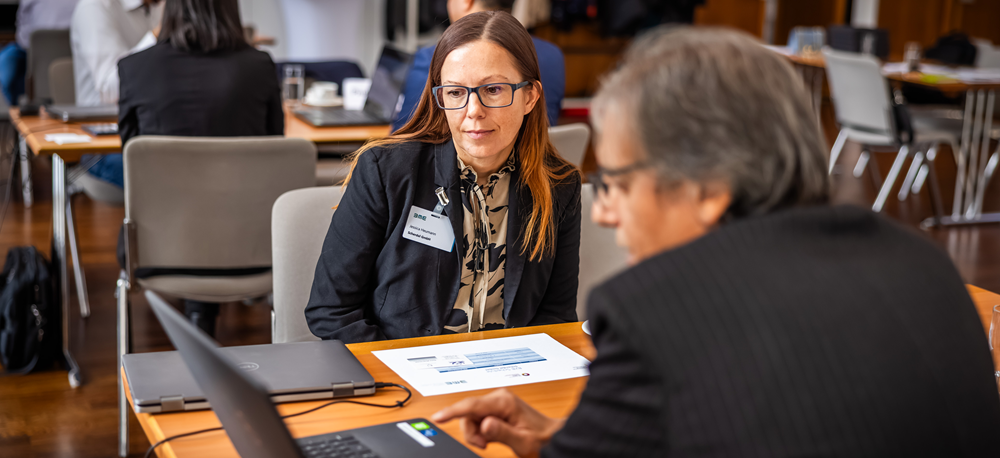
Source: IHK Maghreb, Schütze
Register now free of charge and take part: 2nd Baltic States and Finland Purchasing Initiative
18-19 March 2026, Offenbach, Germany, free of charge
(by Olaf Holzgrefe, Head of International, BME)
Why participating?
Increasing geopolitical uncertainties, volatile supply chains, and rising costs in traditional procurement regions are forcing German companies to reevaluate their sourcing strategies. In this context, the Baltic States (Estonia, Latvia, Lithuania) and Finland are increasingly becoming the focus of industrial purchasing managers. The region offers a rare combination of industrial expertise, EU legal and regulatory certainty, logistical proximity, and growing technological capabilities—particularly in the fields of mechanical engineering, metalworking, plastics technology, and electronics. The BME is addressing this focus together with its partner, the German Chambers (AHK), as part of the 2nd Baltic States/Finland Purchasing Initiative on behalf of the Federal Ministry for Economic Affairs and Energy (BMWE).
Industrially developed market structures with a clear focus on intermediate goods
Finland has a highly developed industrial base with a clear specialization in mechanical engineering, metalworking, and electrical engineering. Finnish industry is strongly export-oriented and closely integrated into European value chains. Germany has been one of the most important sales and procurement markets for Finnish companies for many years. Machinery, metal components, and electrical and electronic equipment are key product groups.
The Baltic states complement this structure with a large number of efficient, predominantly medium-sized production companies. In Estonia, Latvia, and Lithuania, metalworking in particular has developed dynamically. Many companies operate as specialized suppliers for Western European industrial customers and focus on contract manufacturing, small and medium series, and customer-specific solutions. Competitive clusters are also increasingly emerging in the fields of electronics manufacturing and industrial plastics processing.
A characteristic feature of the region is the high adaptability of suppliers: flat hierarchies, short decision-making processes, and a strong customer focus enable German buyers to implement technical requirements flexibly – an advantage over highly standardized large suppliers in other regions of the world.
Attractiveness due to proximity, cost structure, and EU framework conditions
A key advantage of the Baltic and Finnish procurement market is its geographical and regulatory proximity. All countries are part of the EU single market, which guarantees duty-free trade, uniform standards, and a high degree of legal predictability. For purchasing, this means lower transaction costs, fewer regulatory risks, and significantly easier supplier integration.
In terms of logistics, German companies benefit from short transport routes by road, rail, and sea, especially when compared to Asian procurement markets. Proximity not only enables shorter delivery times, but also a faster response to changes in demand—an increasingly critical factor in volatile markets.
In terms of cost structure, the Baltic region in particular continues to offer advantages for labor-intensive manufacturing steps without compromising on quality or technical expertise. Finland, on the other hand, impresses with its high productivity, energy efficiency, and outstanding engineering expertise, especially when it comes to complex assemblies and technologically sophisticated components.
Relevance for mechanical engineering, metal, plastics, and electronics
The region is particularly interesting for German mechanical and plant engineering as a source of mechanical components, welded assemblies, precision-manufactured metal parts, and electrical engineering intermediate products. Plastics processors in the Baltic region offer specialized solutions for technical plastic parts, often in combination with metal or electronic components. Finnish suppliers are also strongly positioned in the fields of automation, drive technology, and industrial electronics.
A decisive factor is the high level of compatibility with German quality and sustainability requirements. Many companies work according to international standards, are ISO-certified, and have experience in working with German OEMs and Tier 1 suppliers.
Strategic importance and future potential in the context of supply chain resilience
The growing importance of the Baltic States and Finland is not a short-term trend, but rather an expression of a strategic realignment of industrial procurement. Near-sourcing within Europe is increasingly seen as a means of making supply chains more robust, transparent, and controllable.
For German buyers, the Baltic and Finnish procurement market offers a substantial strategic addition to existing supplier networks. The region combines industrial efficiency with proximity, flexibility, and regulatory certainty. Particularly in the fields of mechanical engineering, metal, plastics, and electronics, attractive opportunities are opening up to optimize cost structures, reduce dependencies, and at the same time increase quality and delivery reliability.
Those who specifically build up suppliers in this region today are not only investing in short-term competitive advantages, but also in the long-term resilience and sustainability of their own value chain.
My conclusion: "In many industries, there are good relationships between German industry and suppliers from the region. For these companies, Germany is often not an unfamiliar market. However, the procurement potential has not been fully exploited.“